
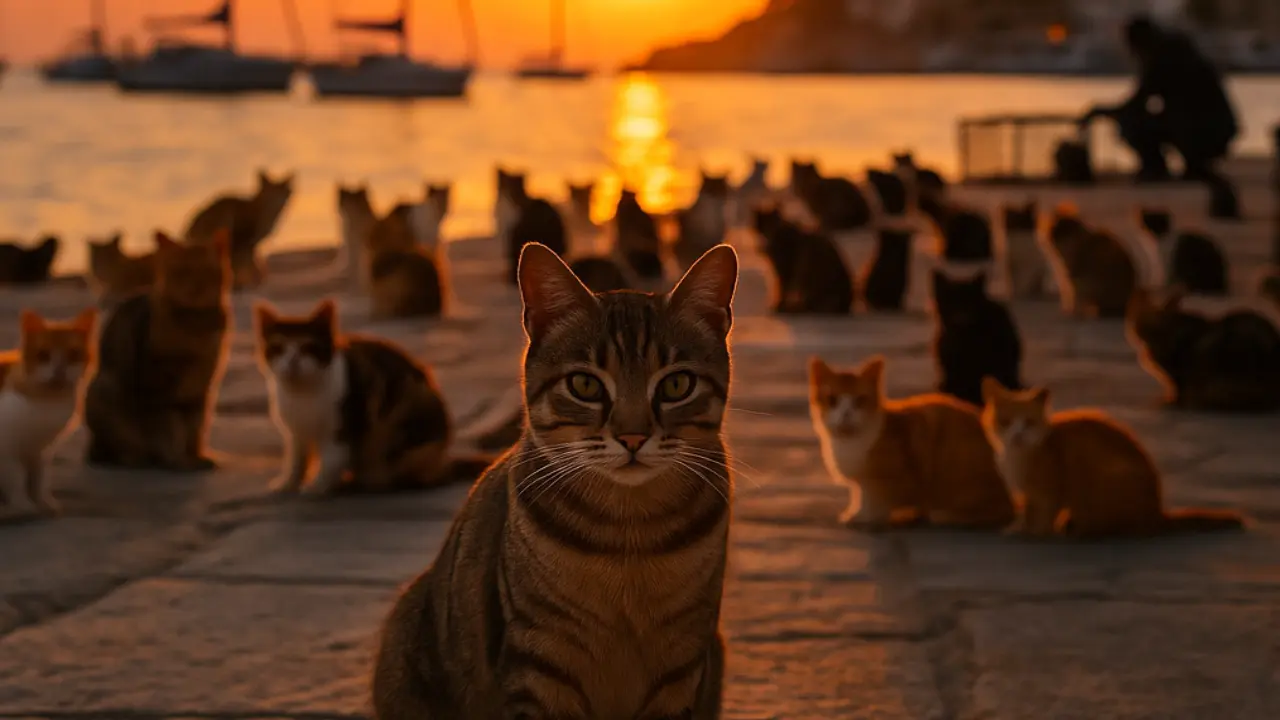
The Island Where Cats Outnumber People
Cyprus — a sun-soaked island in the Mediterranean known for its history, crystal waters, and hospitality — has found itself in an unexpected predicament. With an estimated one million cats roaming freely across cities, beaches, and mountain villages, the feline population now rivals that of the human residents. For many, the cats add charm to the island’s culture; for others, it’s an ecological emergency.
According to recent government data and veterinary surveys, Cyprus’ feral cat population has surged by nearly 30% in the past five years, fueled by mild weather, abundant food sources, and generous feeding by locals and tourists alike. “They’re part of our identity,” said Limassol resident Anna Papadopoulou, who manages a small cat shelter. “But the growth is becoming unmanageable.”
How the Problem Began
The presence of cats in Cyprus dates back thousands of years — archaeologists even discovered a 9,500-year-old feline burial alongside a human at the Shillourokambos site, the oldest known evidence of cat domestication in the world. Over time, cats became beloved guardians of homes and monasteries, protecting grain and food supplies from rodents.
Did You Know?
The “Cats of Saint Nicholas Monastery” legend tells of Byzantine monks who brought hundreds of cats from Egypt to control snakes that plagued the island.
Today, however, that historical coexistence has spiraled into overpopulation. Urban growth, irregular feeding practices, and inconsistent neutering programs have allowed colonies to multiply faster than local shelters can handle.
The Government’s Sterilization Plan — And Its Flaws
To address the crisis, Environment Minister Maria Panayiotou recently announced a tripling of the sterilization budget from €100,000 to €300,000 annually. Under this initiative, municipalities partner with private veterinarians to neuter feral cats captured by animal welfare groups. Yet experts say the program lacks coordination and scale.
Related Reading: Lifetime Dog Insurance: What Every Pet Owner Should Know
“Money alone won’t fix this,” said Charalambos Theopemptou, chairman of the Parliamentary Environment Committee. “Without a unified, data-based strategy, sterilization efforts risk being scattered and inefficient.”
Currently, fewer than 10% of female feral cats are spayed each year — far below the 70% threshold needed to stabilize the population. Rural areas, in particular, remain neglected due to limited veterinary infrastructure.
Experts Call for a National Action Plan
Veterinary Association president Demetris Epaminondas advocates for a comprehensive four-year strategy to bring the cat population under control. His proposal includes:
- Establishing mobile sterilization clinics across all districts;
- Creating a public donation fund to support local rescue efforts;
- Launching educational campaigns on responsible pet ownership;
- Centralizing population data using microchip tracking.
“If we streamline the process and offer free neutering through private clinics,” he explained, “owners will be more motivated to sterilize their pets, and feral numbers will start to decline.”
Tourism Meets Animal Welfare
Ironically, Cyprus’ cat colonies have become both an attraction and a challenge for tourism. Social media influencers and travel bloggers often post images of cats lounging among ancient ruins or napping beside turquoise waters, drawing millions of views. Yet environmentalists warn that excessive feeding and waste are disrupting local ecosystems, threatening native birds and reptiles.
“Tourists love photographing them, but few understand the impact,” said conservationist Elena Michail. “Unchecked colonies alter the food chain and carry disease risks for other wildlife.”
Can Cyprus Find Balance Between Love and Responsibility?
Animal advocates stress that compassion must go hand-in-hand with responsibility. Volunteer groups, such as Cyprus Cat Protection and Welfare Society, are collaborating with local vets to identify breeding hotspots and organize spay-neuter drives. They believe that, with consistent public participation, the feline population could stabilize within four years.
Meanwhile, community-led “cat cafés” and adoption programs are emerging, offering a sustainable way to manage colonies humanely while enriching tourism with ethical practices.
The Road Ahead
Cyprus’ feline story is both heartwarming and cautionary — a testament to how human kindness can, unintentionally, tip nature’s balance. The island’s challenge now is to preserve its cat-loving culture while protecting its ecosystems and public health. Whether through unified policies, community funding, or education, the future of Cyprus’ cats will depend on collective responsibility — not just affection.
As Epaminondas puts it, “We don’t need to eliminate the cats — just give them a future that’s sustainable for all.”